
Getting people to visit your website is no longer the hardest part of building an online business. In fact, with social media, SEO, and paid ads, attracting traffic has become relatively accessible. However, the real challenge lies in converting that traffic into revenue.
Many entrepreneurs struggle with this exact problem. They have visitors, clicks, and even engagement, yet sales remain low. This is where understanding what a sales funnel is becomes critical. Without a clear system to guide potential customers from interest to purchase, even the best traffic will not translate into income.
Therefore, if you want to grow a sustainable online business, you must learn not just how to attract visitors, but how to turn them into paying customers. In this article, we will explore how to do exactly that by building an effective funnel marketing strategy, improving your lead generation funnel, and applying proven conversion optimization tips.
Understanding the Journey from Visitor to Customer
To begin with, it is important to recognize that people rarely buy immediately after discovering your brand. Instead, they go through a process. First, they become aware of your existence. Then, they develop interest, evaluate your offer, and finally decide whether to purchase.
This process is what we refer to as a sales funnel.
So, when people ask what a sales funnel is, the simplest answer is this: it is a structured journey that guides potential customers from the first point of contact to the final purchase. Without this structure, visitors may come and go without taking any meaningful action.
In other words, your funnel acts as a bridge between attention and revenue.
Why Most Visitors Don’t Convert

Before diving into solutions, it is essential to understand why conversions fail in the first place. Many businesses assume that traffic automatically leads to sales. However, this is rarely the case.
Often, visitors leave because they are confused, unconvinced, or distracted. For instance, if your message is unclear, people will not understand what you are offering. Similarly, if there is no trust, they will hesitate to buy. Additionally, if the process is complicated, they may abandon it altogether.
As a result, simply increasing traffic without improving conversion is like pouring water into a leaking bucket. You may see activity, but you will not see results.
The Foundation of a High-Converting Funnel
Now that we understand the problem, the next step is learning how to build a sales funnel that actually works.
At its core, a successful funnel has three key stages: awareness, consideration, and conversion. Each stage serves a specific purpose and requires a different approach.
At the awareness stage, your goal is to attract attention. This can be done through content, social media, or ads. However, attracting attention is not enough. You must also capture it.
This is where your lead generation funnel comes in.
According to FORBES: The key to converting repeat visitors is to think about the buying process from their point of view
Building an Effective Lead Generation Funnel
A lead generation funnel is designed to turn visitors into leads before they become customers. Instead of asking for a sale immediately, you first offer value in exchange for contact information.
For example, you might offer a free guide, checklist, or mini-course. In return, visitors provide their email address. This simple exchange allows you to continue the conversation beyond the initial visit.
More importantly, it builds trust.
Once someone becomes a lead, you can nurture them through email marketing, content, and follow-ups. Over time, this increases the likelihood of conversion.
Therefore, if you are serious about learning how to build a sales funnel, you must prioritize lead generation as your first step.
Crafting a Compelling Offer
Even with a strong funnel structure, your success ultimately depends on your offer. If your offer is weak, no amount of traffic or marketing will fix it.
A compelling offer solves a specific problem and clearly communicates its value. It answers the question, “Why should I buy this?”
For instance, instead of saying “Buy my course,” you might say, “Learn how to start an online business in 30 days without spending money.” The second option is more specific, outcome-driven, and persuasive.
In addition, your offer should reduce risk. This can be done through guarantees, testimonials, or free trials. When people feel safe, they are more likely to take action.
The Role of Trust in Conversion
Trust is one of the most important factors in any funnel marketing strategy. Without it, even the best offers will fail.
Visitors need to believe that you can deliver on your promise. This belief is built through consistency, transparency, and proof.
For example, sharing testimonials, case studies, or personal experiences can significantly increase credibility. Similarly, having a professional website and clear messaging creates confidence.
Furthermore, trust is not built instantly. It develops over time through repeated positive interactions. This is why nurturing your leads is so important.
Writing Persuasive Content That Converts

Another critical element of conversion is your content. The words you use can either move people closer to a purchase or push them away.
Effective content speaks directly to the reader’s needs, challenges, and desires. It focuses on benefits rather than features and uses simple, clear language.
Additionally, strong calls to action guide the reader toward the next step. Instead of vague phrases like “Learn more,” use direct instructions such as “Get started now” or “Download your free guide.”
These small changes can have a significant impact on your results.
Simplifying the User Experience
In many cases, visitors do not convert simply because the process is too complicated. If your website is difficult to navigate or your checkout process is confusing, people will leave.
Therefore, simplicity is a key part of effective conversion optimisation tips.
Make it easy for visitors to understand what to do next. Reduce unnecessary steps and eliminate distractions. Ensure that your pages load quickly and are mobile-friendly.
The easier it is for someone to take action, the more likely they are to do so.
Using Email Marketing to Close Sales
Once you have captured leads, the next step is nurturing them. Email marketing remains one of the most effective tools for this purpose.
Through email, you can educate, build trust, and present your offer multiple times. Unlike social media, where visibility is limited, email gives you direct access to your audience.
For example, you might send a sequence of emails that introduces your brand, shares valuable insights, and gradually leads to a sales offer.
Over time, this consistent communication increases conversions significantly.
Leveraging Psychology in Your Funnel
Human behaviour plays a major role in decision-making. Therefore, understanding basic psychology can improve your funnel performance.
For instance, scarcity creates urgency. When people believe that an offer is limited, they are more likely to act quickly. Similarly, social proof reassures potential buyers that others have already benefited from your product.
In addition, clarity reduces hesitation. When people clearly understand what they will get, they feel more confident in making a decision.
By applying these principles, you can strengthen your funnel marketing strategy and improve results.
Testing and Optimizing for Better Results
Even the best funnels require continuous improvement. What works today may not work tomorrow, and small changes can make a big difference.
This is why testing is essential.
Try different headlines, offers, and layouts to see what performs best. Pay attention to data such as click-through rates and conversion rates.
Over time, these insights will help you refine your approach and maximize your results.
The Long-Term Value of a Strong Funnel
When done correctly, a sales funnel becomes one of the most valuable assets in your business. Instead of relying on constant effort, you create a system that works for you.
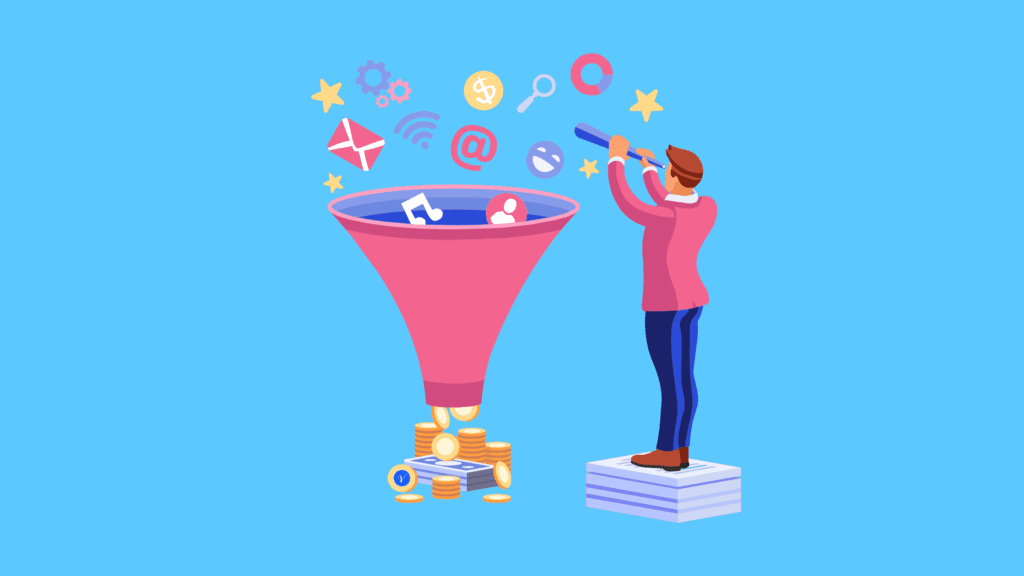
Traffic comes in, leads are captured, relationships are built, and sales are made—all within a structured process.
As a result, you move from unpredictable income to consistent revenue.
Conclusion
In conclusion, turning visitors into paying customers is not about luck—it is about strategy. By understanding what a sales funnel is, building a strong lead generation funnel, and applying effective conversion optimisation tips, you can transform your business results.
The key is to guide your audience through a clear journey, provide value at every stage, and build trust over time. When these elements come together, conversions become a natural outcome.
Call to Action
Now it’s time to take action.
Instead of focusing only on traffic, start building a system that converts. Begin by creating a simple funnel, offering value, and capturing leads. Then, nurture those leads and present your offer with confidence.
Remember, you don’t need a perfect funnel to start; you just need a working one.
So take the first step today, apply these strategies, and start turning your visitors into paying customers.