
If you want to know how to write a sales page, start with its one job: helping the right person decide, with confidence, that your offer is worth buying. Many course creators treat it as an afterthought. They list the modules, add a price and a button, and wait. Then the traffic arrives, and almost nobody buys.
If that sounds familiar, the problem is rarely the course. It’s the page. Knowing how to write a sales page is one of the highest-return skills a creator can build, because every other part of your marketing, from social posts to emails to ads, sends people to it.
This guide sets out nine steps in the order a buyer actually reads them. Each step includes the reasoning behind it and a practical way to apply it. If you plan to host your course on Vonza, you can use the same framework to build the course and the page that sells it in one place.
What Does a Sales Page Actually Do?
A sales page is a single, focused page that moves a visitor from interest to a purchase decision. Unlike a homepage, it has no competing paths. Everything on it exists to answer four questions in sequence:
- Is this for me?
- Will it work?
- Can I trust this person?
- What do I do next?
That sequence is the useful part. When a page feels confusing or unconvincing, it almost always skips one of those questions or answers them out of order. Keep the four questions in mind as you work through the steps below, and you will notice quickly where your current page falls short.
How to Write a Sales Page in 9 Steps
Treat these steps as a framework rather than a rigid template. The order matters because it follows the questions a buyer asks as they scroll. Once you understand this sequence, you can adjust the length and wording to suit your audience and price point.
1. Start with One Specific Reader
Pages that try to appeal to everyone rarely persuade anyone. Before writing a word, define the person you are writing for: their situation, their frustration, the result they want, and what they have already tried. The more specific the description, the easier the writing becomes. “Freelance designers who want to land retainer clients” gives you far more to work with than “creatives.”
The best source for this is your audience itself. Read customer emails, support questions and comments, and note the exact phrases people use to describe their problem. Those phrases are worth more than any clever copy you could invent, because they show the reader that you understand their situation. If you have no customers yet, your early conversations with your first 10 customers are the most valuable research you can do.
How to apply it: Write a one-paragraph profile of your ideal buyer and keep it beside you while you write. Test every section against it.
2. Write a sales page headline that promises a specific result
The headline decides whether the rest of the page gets read. Strong headlines name the outcome, the audience, and, where possible, the method or timeframe. Compare “Photography Course for Beginners” with “Take sharp, well-lit portraits with the camera you already own.” The second tells the reader exactly what they gain.
Resist the temptation to exaggerate. A bold promise you cannot support damages trust faster than a modest one. Follow the headline with a single supporting sentence that clarifies who the course is for and how it works.
How to apply it: Write ten versions of your headline, then choose the clearest one rather than the cleverest.

3. Open with the Problem Your Buyer Recognizes
Before you offer a solution, show that you understand the problem. Describe the situation in the buyer’s own terms: what is frustrating, what it is costing them, and what they have tried without success. When a reader thinks “that’s exactly my situation,” they keep reading.
Keep this section short, usually three to five sentences. Avoid dramatizing the pain. A measured description feels more honest and builds trust more reliably than alarming language.
In practice, an opening for a course on freelance pricing might read: “You know your work is good, yet every proposal ends with a request for a discount. You raised your rates once and lost the client, so you went back to charging less than you should.” Two or three sentences like these tell the reader you understand their situation before you ask for anything.
How to apply it: Draft the opening using the phrases you collected in step 1, and cut anything that describes your own story rather than the reader’s.
4. Present the Solution and What Is Included
Now introduce your course as the route from the problem to the result. Describe outcomes before features. For each module, state what the student will be able to do afterward, not just what the lesson covers. A list of lesson titles tells the reader what you built. A list of outcomes tells them what they gain.
Include the practical details buyers need: the format, how long it takes, how long access lasts, what support is available, and any bonuses. A course that is broken into clear modules is also much easier to present on the page, because each module maps neatly to a promised result.
How to apply it: Convert your course outline into a short list of outcomes, one per module, written as “You will be able to…”
5. Show Proof That the Course Works
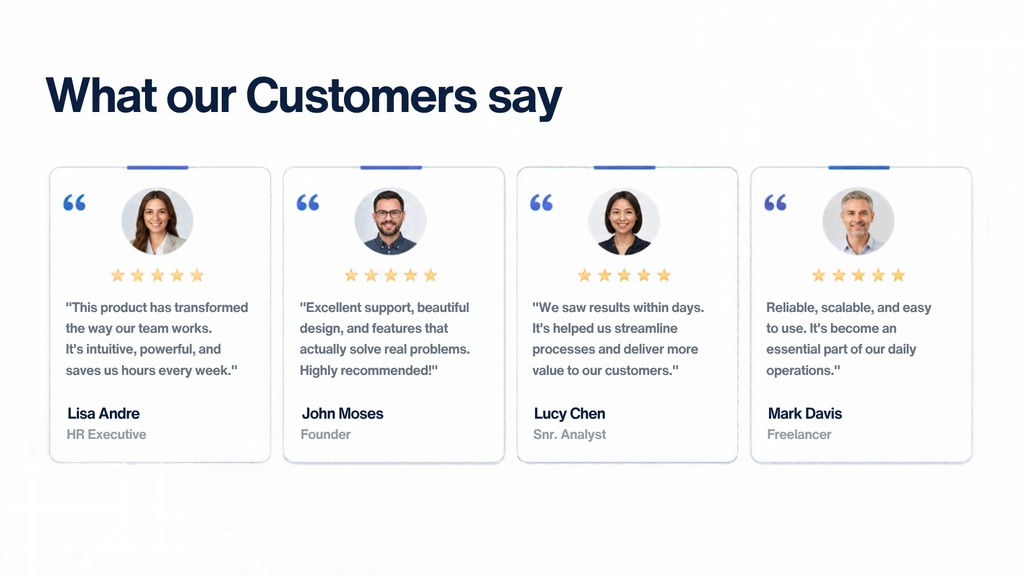
Proof does more work for less effort than almost any other element. It answers the trust question directly, and it does so in someone else’s voice. Useful forms include testimonials with names and specific results, short case studies, screenshots of student work, and honest numbers such as how many students you have taught.
Specific proof outperforms general praise. “I landed my first client three weeks after Module 3” is far more persuasive than “Great course!” If you are new and have no testimonials yet, offer the course to a small group at a reduced price in exchange for detailed feedback, or share your own results and process openly. You can also collect testimonials that sell by asking targeted questions after each module.
Credibility also depends on detail. A testimonial with a full name, a photo, and a measurable result reads as real, while an anonymous line of praise reads as decoration. Where a student gives permission, include a link to their business or profile so a skeptical reader can check for themselves.
How to apply it: Place at least one strong testimonial near the top of the page and another close to the price.
6. Answer Objections Before They Are Raised
Every buyer carries doubts. Do I have the time? Is it right for my level? What if it does not work for me? If the page does not address these, the visitor will leave to think about it and often never return.
A clear FAQ section is the most direct way to handle this, along with a plainly stated refund or guarantee policy where you offer one. Creators who learn how to write a sales page well treat their support inbox as research, because the questions students ask before and after buying are exactly the objections the page needs to answer.
How to apply it: List the ten questions you receive most often and answer each in two or three sentences on the page.
7. Present Your Price with Context
Price is rarely the real objection. Unclear value is. Before revealing the number, restate what the buyer receives and the result they are working toward. Then present the price plainly, without apology or tricks.
If a payment plan suits your audience, show it alongside the full price. You can also place the price in context by comparing it honestly with the alternatives, such as the cost of hiring a coach or the cost of staying stuck.
How to apply it: Put a short recap of the outcomes directly above the price so the value is fresh when the buyer sees the number.
8. Write a clear call to action for your sales page
Give the page one primary action. Button text should describe what happens next and why it matters. “Join the course” or “Start learning today” works better than “Submit.” Repeat the button at natural decision points: after the opening section, after the proof, and at the end of the page.
Add a line of reassurance close to the button. Refund terms, secure checkout, and instant access all reduce hesitation at the moment it matters most.
Placement deserves thought as well. A button that appears only at the very bottom forces the reader to take in the whole page before they can act. A button after the opening section lets an already-convinced buyer purchase straight away, while the rest of the page keeps working on everyone who needs more.
How to apply it: Read your page and ask whether a reader could always find the next step within one scroll.

9. Make the Page Easy to Read and Quick to Load
Most visitors skim before they read. Short paragraphs, descriptive subheadings, generous white space, and a layout that works on a phone all help them find what they need. Check the page on mobile before launch, since a large share of your visitors will arrive on a small screen.
Compress your images, avoid autoplay media that slows loading, and keep the page focused by removing menus and links that lead away from the offer. Hosting your course and its sales page together on Vonza also keeps the path from page to checkout to lessons simple for the buyer.
How to apply it: Load the page on your phone, scroll it once at normal speed, and fix anything that makes you hesitate.
How Long Should a Sales Page Be?
There is no fixed length. The right answer depends on how much a buyer needs to understand before they trust you. A low-priced course on a familiar topic can sell with a short page. A higher-priced program, or one that asks the buyer to change how they work, usually needs more room for proof and objections.
A useful test is to ask whether each section answers one of the four questions from earlier. If it does, keep it. If it only repeats a point already made, or describes your background without helping the buyer decide, cut it. Length is not a problem when every section earns its place, and brevity is not a virtue when it leaves a real doubt unanswered.
One practical habit is to read the page aloud. Anything that sounds like filler, or makes you lose the thread, will have the same effect on a first-time visitor.
Adapting Your Sales Page to Your Price Point
The same framework applies at every price, but the weight of each step shifts. For a low-cost course, a clear headline, a short list of outcomes, and a prominent button often carry the sale, because the risk to the buyer is small. For a premium program, the buyer is weighing real money and real time, so proof, objection handling, and a clear guarantee deserve far more space.
It also helps to think about where your visitors come from. Someone arriving from a long email sequence already trusts you and needs less persuasion. A visitor from a search result or a social post knows little about you, so the page has to do the full job of introducing your approach and building confidence.
Common Mistakes to Avoid
Most underperforming pages share a handful of problems. Check yours against this list:
- Writing about yourself instead of the buyer
- Listing features without explaining the outcome
- Hiding the price or making the next step hard to find
- Using proof that is vague, unattributed, or hard to believe
- Making claims the course cannot support
- Publishing without testing the page on a phone
Review and Improve After You Publish
Treat your first version as a draft. Learning how to write a sales page is an iterative skill, and your own data will teach you more than any template. Track three numbers: how many people visit the page, how many click the main button, and how many complete a purchase. Together they show whether the problem lies in attracting the right visitors, persuading them, or closing the sale.
Change one element at a time, starting with the headline, so you can tell what made the difference. Before each update, read the page once as a stranger would and ask:
- Can I tell who this is for within five seconds?
- Do I understand what I will be able to do after the course?
- Do I believe the proof?
- Is it obvious what to do next?

Turn Your Sales Page into Sales
A persuasive page does not depend on tricks. It is clear about who the course is for, specific about the result, honest about the price, and generous with proof. Once you understand how to write a sales page around those principles, each revision becomes easier and each launch more predictable.
Ready to put this into practice? Get started on Vonza and bring your course and your sales page together in one place.