
Course creators tend to measure success by enrollments. Learners measure it by outcomes. The gap between those two numbers is where most online education businesses quietly lose revenue, reviews, and referrals.
The pattern is consistent across niches and platforms: a strong launch, a wave of enthusiastic first logins, and then a steep fall in activity by the second or third week. Students drop out of online courses at a rate that surprises many first-time creators, and the cause is rarely the quality of the material.
More often, it is a design and support problem, which means it can be solved. This article examines ten of the most common reasons learners disengage and sets out a practical response to each. If you are building or refining a course on Vonza, every fix below can be applied directly to the way you structure, deliver, and support your content.
Why Do Students Drop Out of Online Courses?
Before looking at individual causes, it helps to define the problem correctly. A dropout is not a student who rejects your course. In most cases, it is a student who intended to finish, met friction, and had neither a reason nor a route to continue.
Online learning removes the structure that a classroom provides:
- A fixed schedule
- A visible instructor
- Peers who notice when someone is absent
Without those cues, motivation has to come from the course itself, which shifts the responsibility to you as the creator. When you understand where students drop out of online courses in your own program, you can address the specific point of failure rather than adding more content and hoping engagement improves.
Three themes run through the ten reasons below:
- Clarity: Does the student know what to do and why?
- Momentum: Do they feel they are making progress?
- Support: Does help arrive before frustration does?
Each reason maps to at least one of these.
1. The first session feels overwhelming
The first login carries the highest risk of the entire course. A student opens the platform and meets 40 lessons, several downloads, and a welcome video that runs well past ten minutes. The sheer volume signals effort before it signals value, and a student who feels behind on day one rarely recovers.
Cognitive load matters here. New learners are still deciding whether the purchase was the right one, and they are looking for early evidence. Complexity at the start reads as a warning.
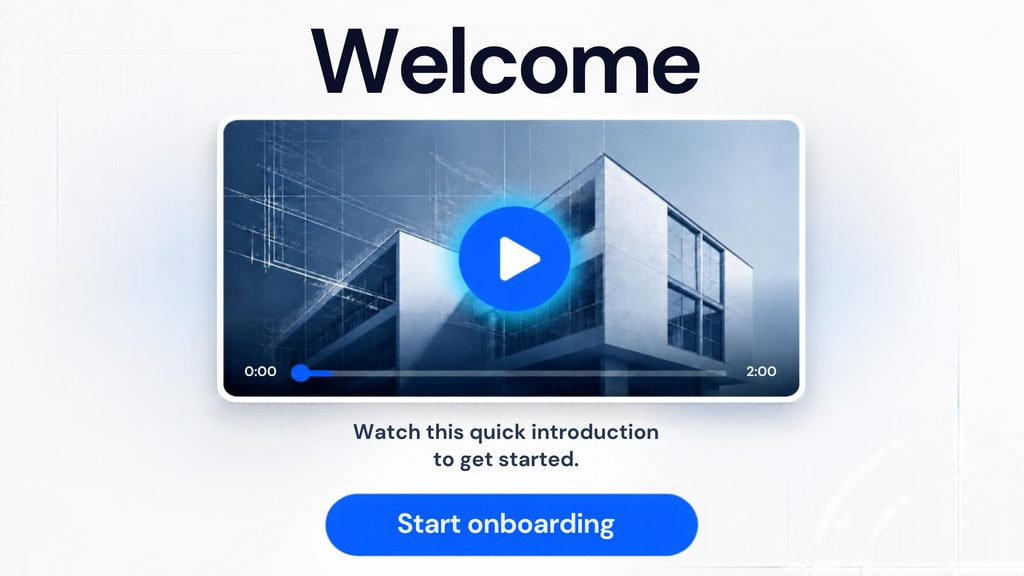
How to prevent it: Design the first session as a quick win. Keep the welcome message under three minutes, name the one action the student should take next, and make the opening lesson something that can be completed in under ten minutes. A deliberate approach to onboarding new students is one of the highest-leverage changes available to any course creator.
2. The promised outcome is vague
Students commit time to a course because they expect a specific change: a skill, a result, a qualification. When the course promises something broad, such as “learn digital marketing,” students have no way to measure whether they are moving toward it. Motivation depends on a visible destination.
A vague outcome also makes it harder to justify the time investment when a busy week arrives. Without a clear payoff, the course becomes the easiest commitment to postpone.
How to prevent it: State a concrete outcome at the course level and repeat it at the module level. “By the end of this module, you will have written and scheduled your first sales email” gives the student something to work toward and something to verify. Specific outcomes also strengthen your sales page and the testimonials you collect later.
3. The content is passive
Long stretches of video without application encourage a viewing habit rather than a learning habit. Students follow along, feel productive, and retain very little. When they later struggle to apply the material, they tend to interpret that as personal failure and disengage.
Passive consumption also weakens the sense of progress. Watching a lesson is not visibly different from skipping it, whereas completing a task leaves evidence.
How to prevent it: Pair every lesson with a small action: a worksheet, a short quiz, a reflection prompt or a task that produces a visible result. Keep individual lessons concise, and remove any segment that does not move the student closer to the module outcome. A well-built course is judged by what a student can do afterwards, not by how many hours of video it contains.
4. Life interrupts and the student falls behind
Most learners who leave do not make a conscious decision to quit. A work deadline, a family obligation or a bad week interrupts their routine, and the gap widens until returning feels like admitting defeat. In practice, the moment students drop out of online courses is usually quiet and gradual rather than dramatic.
The longer the gap, the higher the psychological cost of coming back. A learner who has missed three weeks imagines three weeks of catching up, even if the next lesson takes only eight minutes.
How to prevent it: Publish realistic time estimates for each module, and design the course so that missing a week does not penalize the student. Re-entry messages should be warm and specific. A note such as “Your next lesson takes eight minutes, and your progress is saved” lowers the barrier far more effectively than a reminder about falling behind.
5. The learning experience is isolated
Studying without interaction is a well-known weak point in online education. Students lose the social signals that sustain effort in a classroom: seeing others progress, comparing notes, and being known by name. Without them, the course competes with every other demand on attention and usually loses.
Isolation is also a quality problem. Learners who cannot ask questions in context often fill gaps with assumptions, which compounds confusion in later modules.
How to prevent it: Provide at least one channel for peer and instructor interaction. This can be a community group, scheduled live Q&A sessions or discussion prompts attached to each module. Ask students to introduce themselves during the first week, since early participation tends to encourage continued participation. Even a single monthly group call can change the tone of a course.

6. Questions go unanswered
Support is where many courses fail without the creator realizing it. A student reaches a confusing lesson, submits a question, and waits several days. By the time a reply arrives, the moment of motivation has passed, and the student has returned to other priorities.
Response time is a retention variable. Every unanswered question increases the chance that a student concludes the course is not designed for them. Support is therefore part of the product, not an administrative layer around it.
How to prevent it: Publish a clear response-time commitment, such as a reply within 24 hours on business days, and build your workflow to meet it. Compile the questions you receive repeatedly into an FAQ so common issues are resolved before they become tickets. Consistent customer support habits turn a stalled student into a returning one, and the tone of the reply matters as much as its speed.
7. Progress is invisible
People persist when they can see movement. A course that offers no indicator of how far a student has come, or how far remains, asks them to work on trust alone. Over several weeks, that trust erodes.
Visible progress also supports completion near the end of a course. Students who can see they are 80 percent finished are generally more motivated to complete the remaining 20 percent than those who cannot tell where they stand.
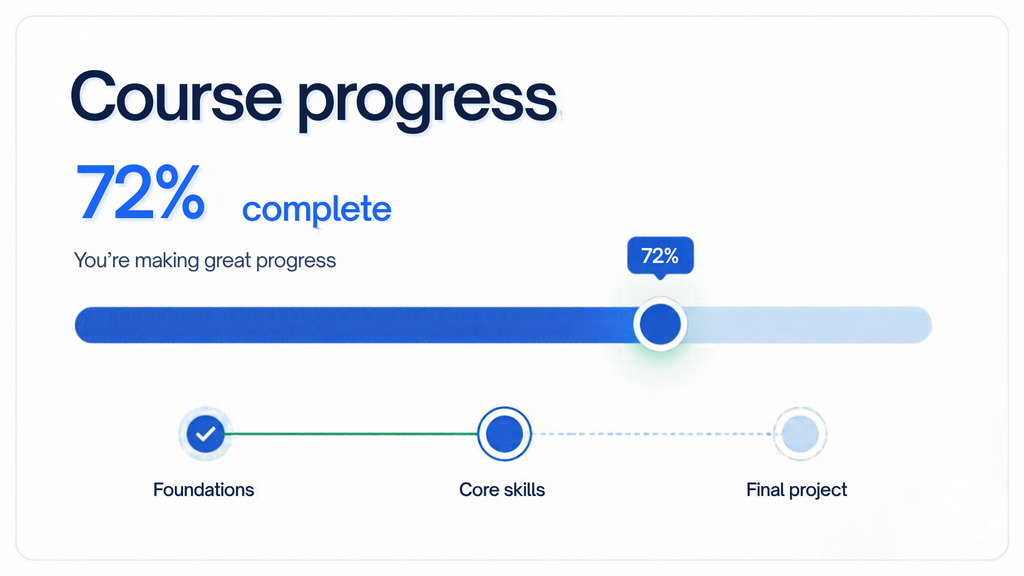
How to prevent it: Use progress bars, module checklists and completion messages to make advancement explicit. Mark milestones deliberately: a short congratulatory note at the end of each module, or a certificate at the end of the course. These small acknowledgements cost little to build and consistently support momentum.
8. Technical friction creates easy exits
Forgotten passwords, videos that buffer, and pages that render badly on a phone are each a small obstacle, but obstacles accumulate. For a student with limited time, a login problem is often reason enough to postpone the lesson, and postponement frequently becomes abandonment.
This matters most for audiences who learn on mobile devices or on variable connections, where lightweight pages and reliable access are not optional.
How to prevent it: Test your entire course on a phone before launch, include a short access guide in the welcome email, and make password recovery straightforward. Platform choice is part of this decision. Vonza is designed to give students smooth access to course content, which reduces technical friction for them and the volume of avoidable support requests for you.
9. The course does not match the promise
When a sales page promises one outcome, and the course delivers another, students feel misled. Some request a refund, and many simply stop logging in. In both cases, the damage extends beyond a single customer, because disappointed students rarely recommend a course or leave favorable reviews.
Misalignment usually appears when marketing copy is written separately from course content, or when the course evolves after launch without the sales page being updated.
How to prevent it: Write the sales page from the course outline rather than from memory. State who the course is for, who it is not for, and what a student will be able to do afterwards. It also helps to break your course into modules that correspond directly to each promise you make, so the structure of the course confirms the claim on the page.
10. No one notices when a student goes quiet
Disengagement rarely announces itself. A student stops logging in, and unless the creator is watching activity, the absence goes unnoticed until a refund request or a negative comment appears. By that stage, the opportunity to re-engage has largely passed.
Many creators treat inactivity as the student’s decision. In practice, a timely and personal message often reveals a solvable problem: a technical issue, a misunderstanding or a scheduling conflict.
How to prevent it: Establish a simple follow-up routine. If a student has been inactive for seven days, send a short, personal message that offers help and links to the next lesson. Keep the tone supportive rather than corrective. Many students respond with a clear reason and a commitment to return, and each reply gives you information you can use to improve the course.
Where should you start?
Fixing all ten issues at once is neither necessary nor practical. A more effective approach is to identify the point at which learners leave and work backwards from there. For most creators, the highest-impact window is the first 48 hours after purchase, because that is where so many students drop out of online courses before they have properly begun. A concise welcome, a small first task, and a clear next step address clarity, momentum, and support in a single sequence.
Once the first session is working, turn to support response time and follow-up for inactive students. Those two areas require little additional content and tend to produce the quickest improvement in how students feel about the course.
It is also worth deciding in advance how you will measure progress. Useful indicators include:
- The share of students who complete the first lesson
- The average time between logins
- The module where activity drops most sharply
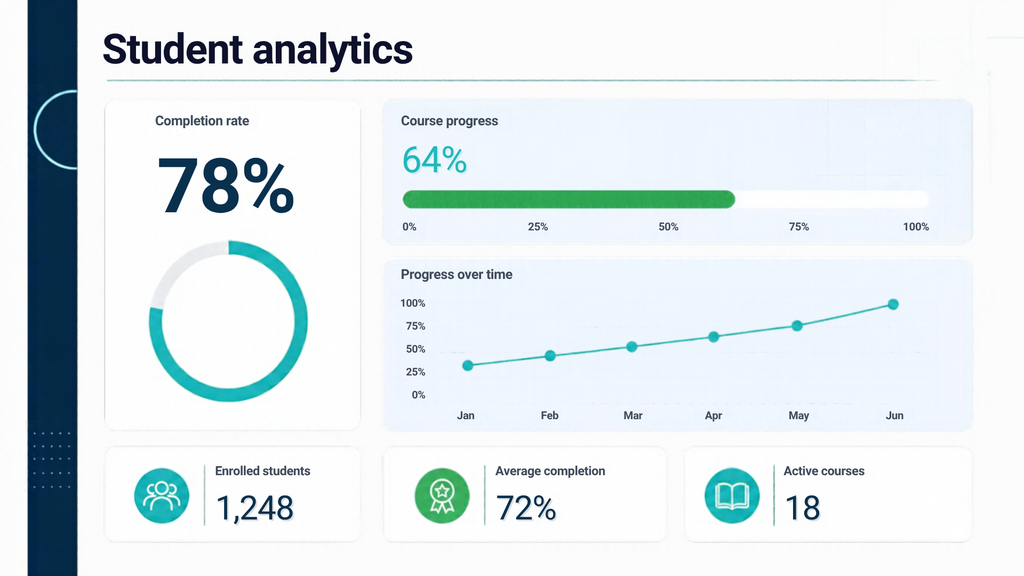
Reviewing these figures monthly gives you evidence for where to improve next, rather than relying on instinct.
Build a course your students finish
Retention is not secured by asking students to try harder. It is secured by making the path clear, showing progress, and making sure help arrives quickly. When you understand why students drop out of online courses, you can design a program that removes those obstacles before they appear, which means better outcomes for learners and a stronger business for you.
If you are ready to build a course your students will complete, get started on Vonza and set up your first course in one place.