
If 2024 was the year businesses tested AI, 2025 is the year they monetize it.
Artificial Intelligence is no longer a shiny tech trend, it’s the quiet engine driving record-breaking sales growth across industries.
Look at the numbers: Forbes recently reported that companies integrating AI into their sales processes are seeing up to 40% faster deal closures and 50% higher lead-to-conversion rates. And according to CNBC, over 60% of global sales leaders now say AI tools have “fundamentally transformed” how they sell.
What’s driving this shift? It’s simple.
AI helps sales teams do what humans do best, build relationships and close deals, by removing everything that slows them down.
Think of AI as a force multiplier:
- It predicts which leads will convert before a call is made.
- It automates tedious admin tasks so reps can focus on conversations.
- It personalizes every message to match what the buyer actually cares about.
The result? Smarter selling, faster growth, and happier customers.
But here’s the real question every entrepreneur, sales director, and founder should be asking:
How can I leverage AI in my sales process right now, without losing the human touch that makes selling work?
Let’s explore what “AI in sales” actually means and explore how businesses are using it to unlock new levels of revenue in 2025.

Leveraging AI in Sales to Increase Revenue
What Does “AI in Sales” Really Mean?
When people hear “AI in sales,” they often picture robots taking over calls or automated emails flooding inboxes. But that’s not it.
At its core, AI in sales is about enhancing human intelligence, not replacing it.
It’s technology that learns from your sales data, calls, emails, CRM entries, conversions, and helps you make smarter, faster decisions.
Picture this:
- Your AI assistant flags a high-potential lead based on tone analysis during a call.
- It suggests the next best action, maybe a follow-up email or a product demo.
- It automatically logs that action in your CRM and tracks the response.
That’s AI in action, working behind the scenes to help your team close more deals with less friction.
It integrates into tools you already use, like Salesforce, HubSpot, Pipedrive, or Vonza, to handle everything from prospecting and forecasting to customer follow-ups.
Here’s the key difference between automation and AI:
- Automation executes repetitive tasks.
- AI learns from patterns and continuously improves performance.
In 2025, the most successful sales organizations aren’t the ones using AI as a gimmick. They’re the ones using it as a strategic partner.

Why Traditional Sales Approaches Are Losing Ground
The sales playbook that worked ten years ago simply doesn’t work today.
Cold calling, generic email blasts, and gut-based decision-making are fading fast. Why? Because buyers have changed.
Modern consumers are smarter, busier, and expect personalized attention. They research brands before ever speaking to a salesperson; compare options instantly online. And want fast, accurate, and relevant interactions, every time.
Traditional sales methods can’t keep up. Manual prospecting eats up hours, follow-ups get delayed, and customer insights go unused. Meanwhile, AI-driven competitors are already ten steps ahead.
Here’s the brutal truth:
In the era of AI, relying solely on human intuition isn’t a competitive advantage, it’s a liability.
According to Yahoo Finance, companies using AI-driven sales analytics in 2024 outperformed traditional teams by 37% in year-over-year revenue growth. Those that resisted change fell behind, often losing customers to faster, more data-savvy competitors.
So, if traditional selling is about persuasion, modern selling is about precision, knowing exactly who to target, when, and with what message.
And AI is the secret weapon making that possible.
Top Ways AI Is Increasing Revenue for Businesses in 2025

Now let’s get practical.
How exactly are top-performing businesses using AI to boost sales revenue?
Below are five key areas where AI is delivering real, measurable impact.
1. Predictive Analytics for Smarter Decision-Making:
Imagine walking into a sales meeting already knowing which leads are 80% likely to convert. That’s not luck, that’s predictive analytics powered by AI.
Predictive AI analyzes years of sales data, market trends, and customer behavior to forecast outcomes. It can tell you:
- Which leads to prioritize
- Which deals are at risk
- Which products to promote next quarter
This shift isn’t just about efficiency, it’s about confidence.
Sales managers no longer rely solely on gut feelings; they make decisions backed by real-time insights. Reps know exactly where to focus their energy, and executives can predict revenue more precisely.
Think of predictive AI as your in-house sales strategist, one that never sleeps, never forgets, and keeps learning.
2. Hyper-Personalization at Scale:
AI allows you to tailor every email, ad, and conversation to the individual, not just the segment. It analyzes customer data, purchases, browsing history, and even sentiment, to craft messages that feel personal. For instance:
- Instead of “Hi John, we noticed you liked our software,” AI says, “Hi John, since you viewed our Pro Plan twice this week, here’s an exclusive 10% offer if you sign up today.”
That’s personalization that converts.
Forbes notes that companies using AI-driven personalization saw revenue increases up to 25%, as customers respond better to experiences that feel curated rather than canned.
The secret? AI helps sales reps sound more human at scale. It’s not just sending more emails, it’s sending the right emails to the right people at the right time.
3. Sales Automation and Efficiency Gains:
Let’s be honest: most salespeople didn’t get into this business to spend hours logging data or scheduling follow-ups. They want to sell. AI makes that possible again.
By automating repetitive administrative tasks, like updating CRMs, scheduling meetings, and drafting follow-ups, AI gives sales teams back their most valuable asset; time.
According to Yahoo Finance, AI-powered sales automation can save up to 2.5 hours per rep per day. Multiply that by your entire team, and the productivity gains are massive.
Here’s what modern AI automation looks like:
- Auto-updating lead status after every call
- Triggering follow-up sequences based on customer engagement
- Summarizing call transcripts and action items instantly
Tools like Vonza AI, Drift, and Outreach are leading this new wave, combining automation with human-like intuition to make every rep more productive.
The best part? Salespeople love it because it removes the grunt work and lets them focus on closing deals and building relationships.
In other words, AI doesn’t make humans less relevant, it makes them more effective.
4. Chatbots and Conversational AI for Customer Engagement:
Once upon a time, chatbots were little more than clunky pop-ups on websites. But in 2025, they’ve evolved into smart, conversational assistants that can actually nurture leads, answer complex questions, and even close sales, all without losing the human touch.
Today’s AI chatbots are powered by natural language processing (NLP) and real-time learning. They don’t just follow scripts, they understand context, anticipate intent, and personalize responses.
For instance, when a potential client visits your site at 2 a.m., your AI assistant can:
- Greet them by name (if they’re a returning visitor)
- Recommend the right product based on browsing behavior
- Offer a discount code
- Schedule a demo for the next morning
That’s a sales conversation happening while your team sleeps. The reason? Instant engagement. In sales, timing is everything, and AI ensures your brand never misses a moment to connect.
But here’s what sets great companies apart:
They don’t let AI replace human reps; they let it prepare customers for meaningful human interaction. The best AI systems know when to hand off the conversation to a salesperson, ensuring continuity and authenticity.
As CNBC noted in its 2025 Tech & Sales Report:
“AI chatbots don’t eliminate human selling, they make it more effective by filtering noise and amplifying intent.”
The lesson? AI chatbots are not customer service gimmicks, they’re scalable relationship builders.
5. Revenue Forecasting and Pipeline Management
If there’s one thing sales leaders hate, it’s guesswork. Forecasting based on “gut feelings” or outdated spreadsheets is no longer enough, especially when millions of dollars are at stake.
That’s where AI-driven revenue forecasting comes in.
By analyzing historical data, customer interactions, seasonal trends, and even market sentiment, AI can predict future sales performance with jaw-dropping accuracy.
Let’s put that in perspective.
Yahoo Finance highlighted a 2025 study showing that AI-based forecasting tools improved prediction accuracy by over 45% for global enterprises. That means fewer surprises, better planning, and more consistent growth.
AI doesn’t just project numbers, it explains them. It tells you why a deal might fall through, which reps are likely to hit their quotas, and where to allocate resources for maximum ROI.
And the insights are actionable in real time.
For example, if your pipeline shows a slowdown in high-ticket deals, AI might identify a pattern, like customers hesitating due to unclear pricing, and recommend specific counteractions.
This kind of intelligence empowers leadership to make sharper, faster decisions without second-guessing.
As Forbes put it:
“In a volatile economy, data is the new confidence. Companies that can predict, pivot, and personalize through AI will outgrow those that can’t.”
The Real ROI, What Companies Are Seeing
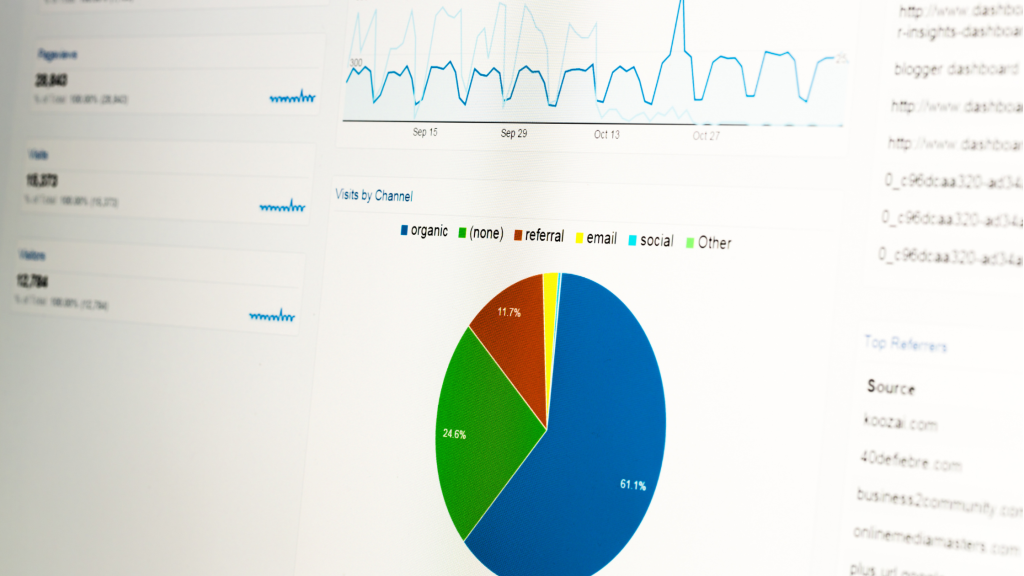
Let’s talk about the bottom line. Does AI actually deliver measurable sales growth? Short answer: yes, when implemented thoughtfully. Businesses integrating AI into their sales ecosystems are already reaping serious returns:
- 35–50% higher lead conversion rates (Forbes, 2025)
- 30% reduction in customer churn (CNBC, 2024)
- 2.5x faster revenue cycles (Yahoo Finance, 2025)
But beyond metrics, AI is changing how sales teams operate. It eliminates silos, improves forecasting accuracy, and aligns marketing, sales, and customer success under a single source of truth: data.
A mid-sized SaaS company featured in Forbes reported that after introducing AI-based prospect scoring and personalized outreach, it increased quarterly revenue by $1.3 million, without hiring additional reps.
The difference wasn’t harder work, it was smarter selling. AI doesn’t replace strategy; it enhances it. The companies seeing the biggest wins are those that treat AI as an extension of their sales DNA, not a plug-and-play tool.
Overcoming Common Concerns and Misconceptions
Of course, with any transformative technology, skepticism is natural. Let’s clear the air.
“Will AI replace my sales team?”
Absolutely not. AI may automate repetitive tasks, but selling is still a deeply human art. Empathy, negotiation, and relationship-building can’t be coded. What AI does is remove the clutter so your team can focus on what they do best, selling.
“Isn’t AI too expensive for small businesses?”
That might’ve been true a few years ago, but 2025 has leveled the field. Cloud-based tools like Vonza, HubSpot AI, and Apollo.io make advanced AI sales automation affordable and scalable. You can start small and scale as you grow.
Implementing AI in Your Sales Strategy: A Practical Roadmap
Knowing AI is powerful is one thing. Using it effectively is another.
Here’s a simple roadmap to start integrating AI into your sales process without getting overwhelmed:
Step 1: Define the Problem You Want to Solve
Do you struggle with lead quality? Forecasting? Follow-ups?
Start with one clear objective, AI works best when focused.
Step 2: Choose the Right Tools
Evaluate AI platforms that integrate with your existing systems. Tools like Salesforce Einstein, Vonza AI Suite, and HubSpot Sales Hub are powerful, user-friendly options.
Step 3: Train Your Team
Technology only performs as well as the people using it. Invest in training programs to help your sales team understand how AI supports them.
Step 4: Monitor, Measure, Adjust
Track performance metrics. What’s improving? What’s not? AI thrives on feedback, keep optimizing.
Step 5: Scale Gradually
Once you see results in one area, expand AI integration across the sales funnel, from lead gen to customer retention.
Remember: successful AI adoption isn’t about buying software; it’s about building a culture of data-driven decision-making.
“Won’t AI make sales feel impersonal?”
Not if it’s done right. The goal of AI isn’t to remove the human element, it’s to enhance it. AI personalizes conversations, remembers details, and ensures your team reaches out at the perfect moment. That’s more human than most traditional processes.
The Human Element: Why AI Works Best with People, Not Instead of Them
Here’s the truth: selling has always been about connection.
AI can analyze emotions, but it can’t feel them. It can recognize voice patterns, but it can’t understand hesitation or excitement. The future of sales isn’t machines closing deals, it’s humans using machines to understand people better.
As Forbes recently said, “AI can predict intent, but only humans can inspire trust.”
That’s where the magic happens.
When technology amplifies empathy, efficiency, and creativity, you don’t just increase revenue, you build relationships that last.
So as we step deeper into this AI-powered decade, remember:
The best sales strategy isn’t man or machine. It’s man with machine.
Conclusion
AI is no longer optional, it’s essential.
Whether you’re a startup founder, a sales director, or a seasoned entrepreneur, embracing AI is the fastest path to sustainable revenue growth.
The winners in 2025 will be the ones who stop fearing AI and start leveraging it.
It’s not about replacing human brilliance. It’s about scaling it.
And when humans and AI collaborate, not compete, the results aren’t just better. They’re exponential.
Leveraging AI in Sales to Increase Revenue
FAQs
1. What’s the best AI tool for increasing sales revenue?
It depends on your business size and goals. For SMBs, Vonza AI or HubSpot are great starts. For enterprises, Salesforce Einstein offers deep analytics and automation.
2. How do I integrate AI into my existing CRM?
Most modern CRMs offer built-in AI modules or API integrations. Start small with automation, then expand into predictive analytics and personalization.
3. Can small businesses afford AI in sales?
Yes. Subscription-based models make AI tools affordable. You can start for as little as $30/month.
4. How does AI improve lead quality?
AI uses behavioral data, engagement patterns, and scoring algorithms to identify leads most likely to convert.
5. What are the biggest mistakes companies make with AI sales strategies?
Rushing implementation, neglecting human training, and failing to define clear goals. AI is powerful, but only when guided strategically.